
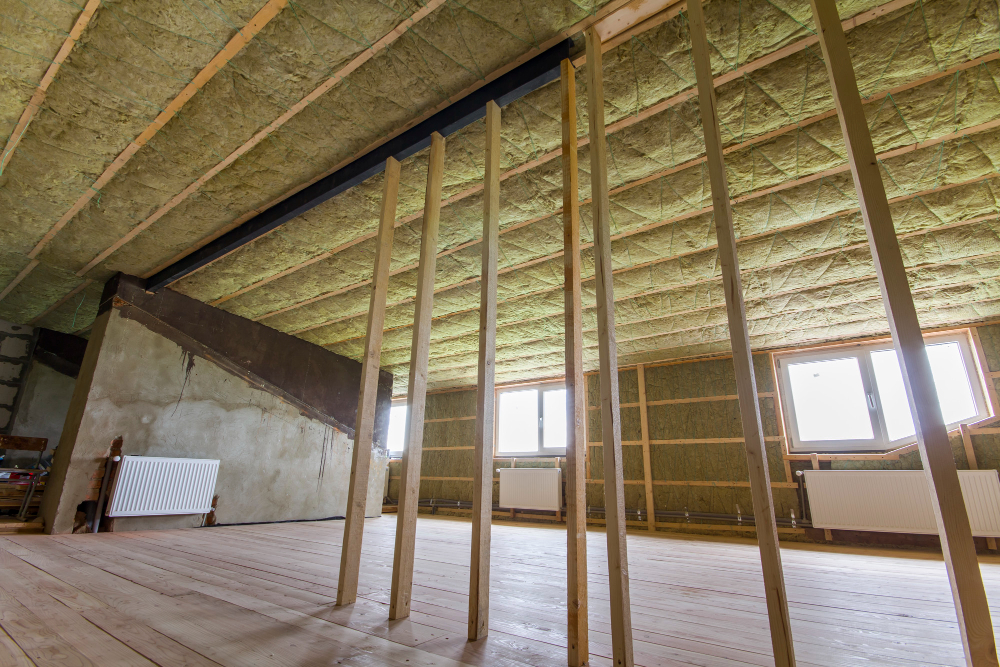
Loft insulation, also known as attic insulation in some regions, is a material or layer of material that is installed in the roof space or attic of a building.
The primary purpose of loft insulation is to reduce heat loss and maintain a more comfortable and energy-efficient indoor environment. It serves several important functions:
- Thermal Insulation: Loft insulation is primarily used to improve the thermal performance of a building. It acts as a barrier to reduce the transfer of heat between the interior of a building and the external environment. By reducing heat loss in the winter and preventing excess heat gain in the summer, loft insulation helps maintain a more consistent and comfortable indoor temperature.
- Energy Efficiency: A well-insulated loft can significantly reduce the amount of energy required for heating and cooling a building. This leads to lower energy bills and reduced carbon emissions, making it an environmentally friendly choice.
- Condensation Control: Loft insulation can help prevent condensation issues in the roof space. By maintaining a more stable temperature in the attic, it reduces the risk of moisture buildup, which can lead to dampness and mold growth.
- Sound Insulation: In addition to its thermal benefits, loft insulation can also provide some degree of sound insulation, reducing the transmission of noise from the outside environment.
There are several types of loft insulation materials, including:
- Fiberglass Insulation: This is one of the most common types of loft insulation. It consists of fine glass fibers and is available in rolls, batts, or loose-fill form.
- Mineral Wool Insulation: Similar to fiberglass, mineral wool insulation is made from natural or synthetic minerals and is available in various forms.
- Cellulose Insulation: Made from recycled paper or cardboard, cellulose insulation is an eco-friendly option. It can be blown or sprayed into the loft space.
- Spray Foam Insulation: This type of insulation is applied as a liquid and expands to fill the available space, providing an airtight and effective thermal barrier.
- Reflective Foil Insulation: Reflective foil insulation consists of layers of foil that reflect heat radiation. It’s often used in combination with other insulation materials.
The choice of loft insulation material depends on factors such as cost, insulation effectiveness, ease of installation, and personal preferences.
Proper installation is crucial to ensure that insulation performs at its best, so it’s often recommended to have insulation installed by professionals.
Loft insulation can significantly improve the energy efficiency and comfort of a home, making it an essential component of many building insulation strategies.