
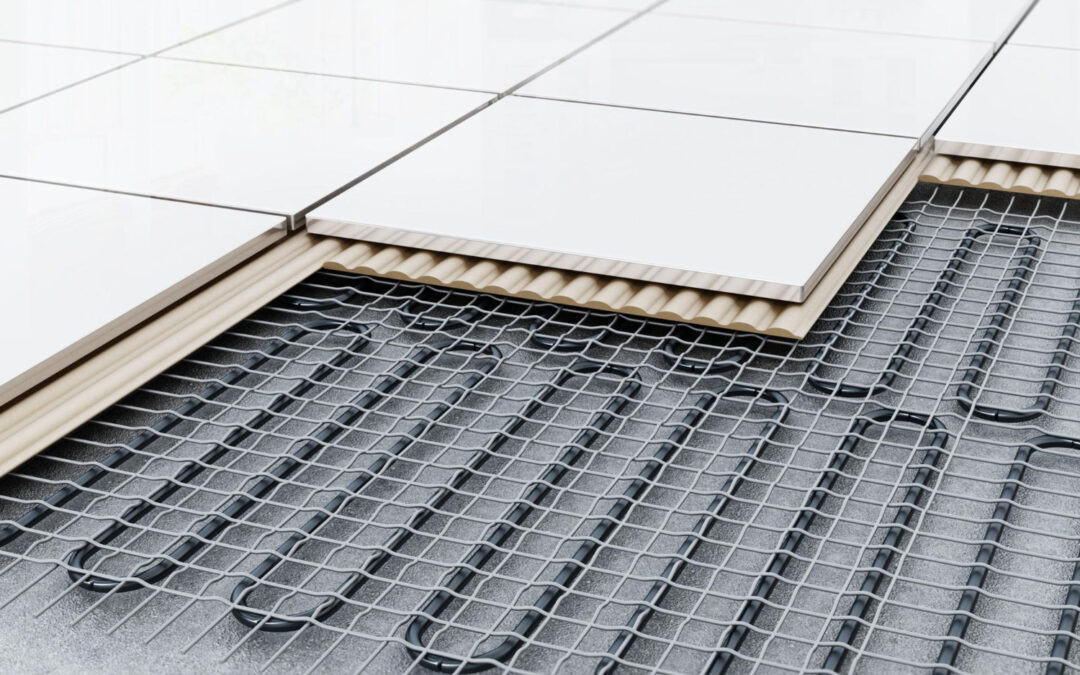
Underfloor heating is a heating system that is installed beneath the floor surface of a building, typically within the floor structure or beneath the floor covering.
This system works by radiating heat upward from the floor, providing a comfortable and efficient way to heat indoor spaces.
Underfloor heating is a popular alternative to traditional forced-air heating or radiators, and it offers several advantages.
There are two primary types of underfloor heating systems: electric underfloor heating and hydronic (water-based) underfloor heating.
Here’s an overview of both types:
Electric Underfloor Heating:
- How it Works: Electric underfloor heating systems consist of electric cables or heating mats that are installed beneath the floor surface. These cables or mats are connected to the electrical supply and generate heat when electricity flows through them.
- Installation: The electric heating elements are typically embedded in a layer of self-leveling compound or installed on top of the subfloor. After installation, the floor covering, such as tiles, laminate, or engineered wood, is placed directly over the heating system.
- Efficiency and Control: Electric underfloor heating provides precise temperature control, making it an efficient option for heating specific areas or rooms. It’s quick to respond to changes in temperature settings.
- Applications: Electric underfloor heating is often used in smaller spaces, such as bathrooms or kitchens, and can be an excellent choice for renovations due to its relatively simple installation.
Hydronic (Water-Based) Underfloor Heating:
- How it Works: Hydronic underfloor heating systems use a network of water pipes to circulate warm water beneath the floor. A boiler or a heat pump is used to heat the water, and a pump circulates it through the pipes to release heat into the floor and, subsequently, into the room.
- Installation: The water pipes are typically embedded in a screed or concrete layer within the floor. The floor covering is then installed on top. Alternatively, some systems use pre-fabricated panels with integrated pipes.
- Efficiency and Control: Hydronic underfloor heating offers excellent energy efficiency, especially when used with a high-efficiency boiler or heat pump. It provides even heating and maintains a consistent temperature throughout the room.
- Applications: Hydronic underfloor heating is suitable for both residential and commercial applications and can be used in large spaces. It’s a popular choice for new construction projects.
Advantages of underfloor heating include:
- Even Distribution of Heat: Underfloor heating provides even heating across the entire floor area, eliminating hot and cold spots.
- Space-Saving: Since it’s installed beneath the floor, underfloor heating doesn’t require wall-mounted radiators, saving space and allowing for more flexible room layouts.
- Energy Efficiency: Properly designed and installed underfloor heating systems can be highly energy-efficient, especially hydronic systems.
- Comfort: Radiant heat from the floor creates a comfortable, draft-free environment.
- Aesthetic Appeal: There are no visible heating elements or radiators, preserving the aesthetics of the room.
Underfloor heating can be a comfortable and efficient choice for heating indoor spaces, and the choice between electric and hydronic systems depends on factors like your heating needs, budget, and the type of flooring used.
Professional installation is essential to ensure the system functions optimally and complies with safety standards and building regulations.